HISTORIES · WALTER BONATTI
Walter Bonatti
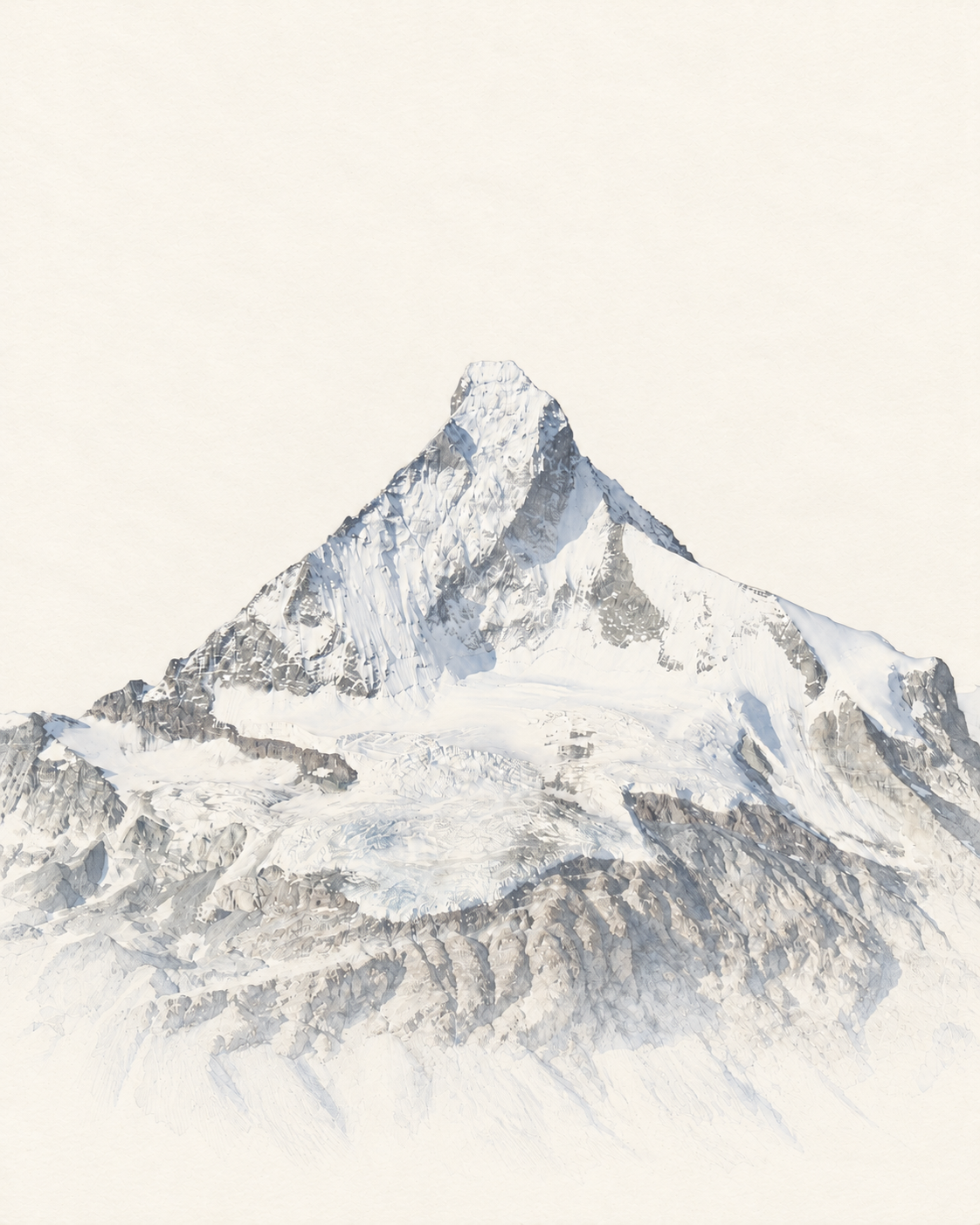
In February 1965, aged thirty-four, Walter Bonatti opened a route on the north face of the Matterhorn, alone, in winter. He then stepped away from extreme mountaineering. But the journeys, the notebooks and the work of telling his stories did not end at the summit.
Before the great walls
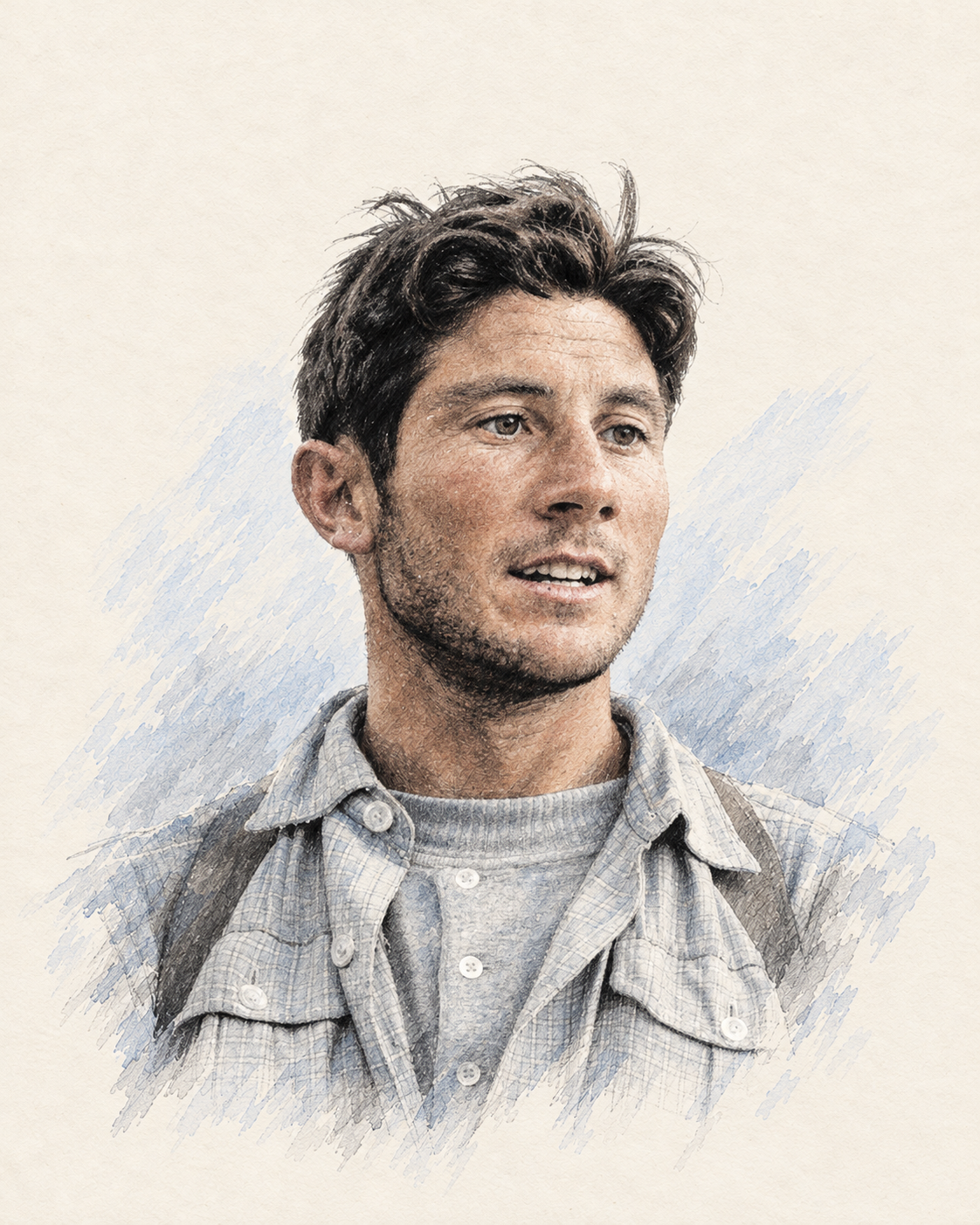
Walter Bonatti was born in Bergamo on 22 June 1930. His family moved to Monza in 1939. He began climbing in August 1948, learning on the Grigne. After military service, he worked at the Falck steelworks in Sesto San Giovanni; in 1953, he left the factory to run a mountain hut at Piani dei Resinelli. The mountains were becoming a place to earn a living too.1
A modest object survives from those early years: a black notebook titled Ascensioni. Held by the National Mountain Museum in Turin, it records his climbs between 1948 and 1953. The notebook had originally been used for chemistry. One kind of learning made room for another, as mountains and ascents entered the pages of an old school exercise book.2
It offers a different measure of his beginnings. Before the familiar portraits, the tributes and the retrospective accounts, there was a practice worth recording. A mountain’s name, a completed climb, a written trace. The notebook was not yet telling the story of a legend. It preserved the work of someone learning.
By 1949, Bonatti had repeated the Cassin route on the Walker Spur of the Grandes Jorasses. He was nineteen. In 1951, he opened the east face of the Grand Capucin with Luciano Ghigo. His apprenticeship had become mountaineering at the highest level.1
A guide at the foot of Mont Blanc
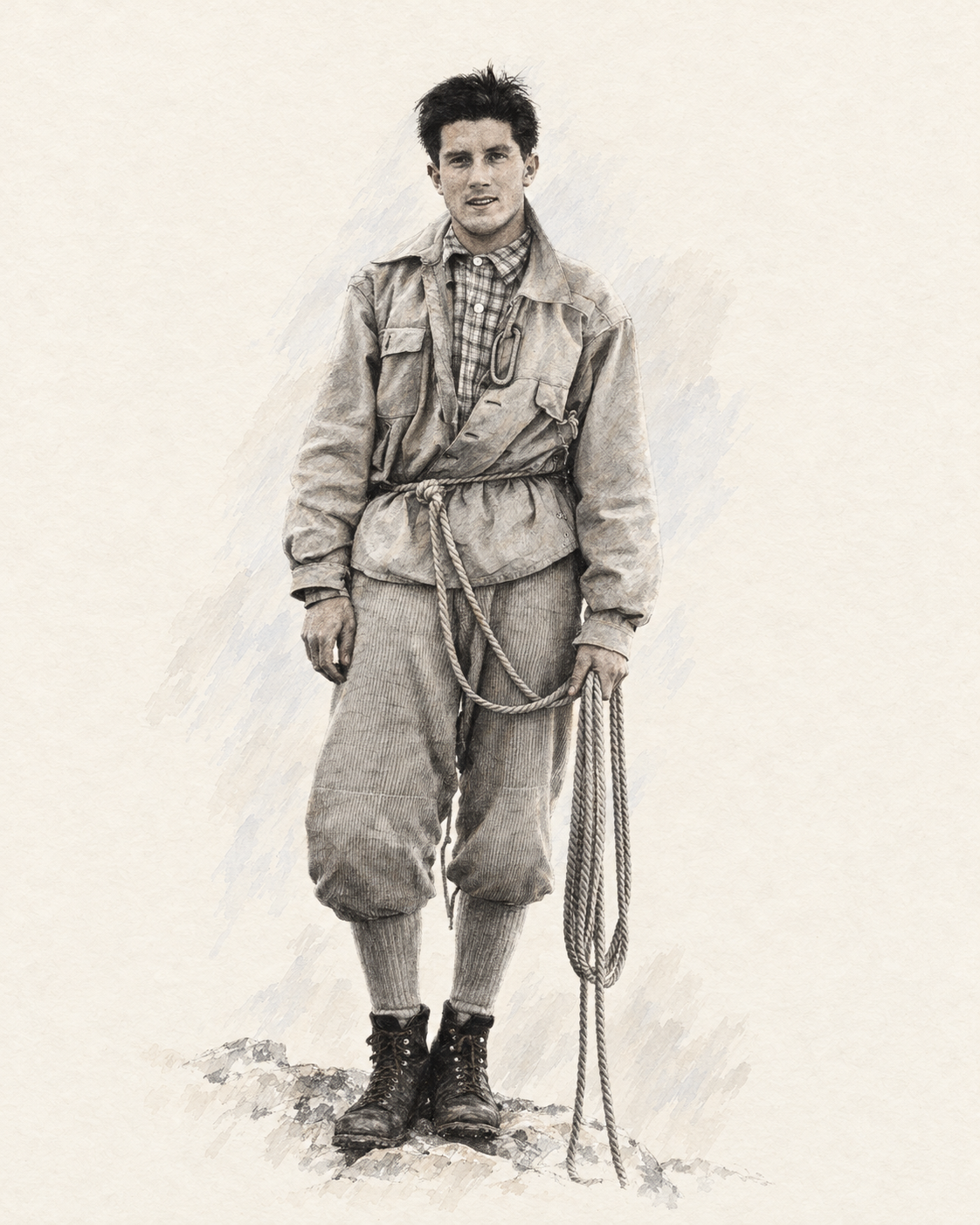
Mont Blanc did not remain simply a destination for major climbs. At the end of 1956, Bonatti settled at its foot, on the Courmayeur side. He applied to the local guides’ society that December and was admitted on 13 April 1957, subject to a three-year probationary period.3
Chamonix and the early pages
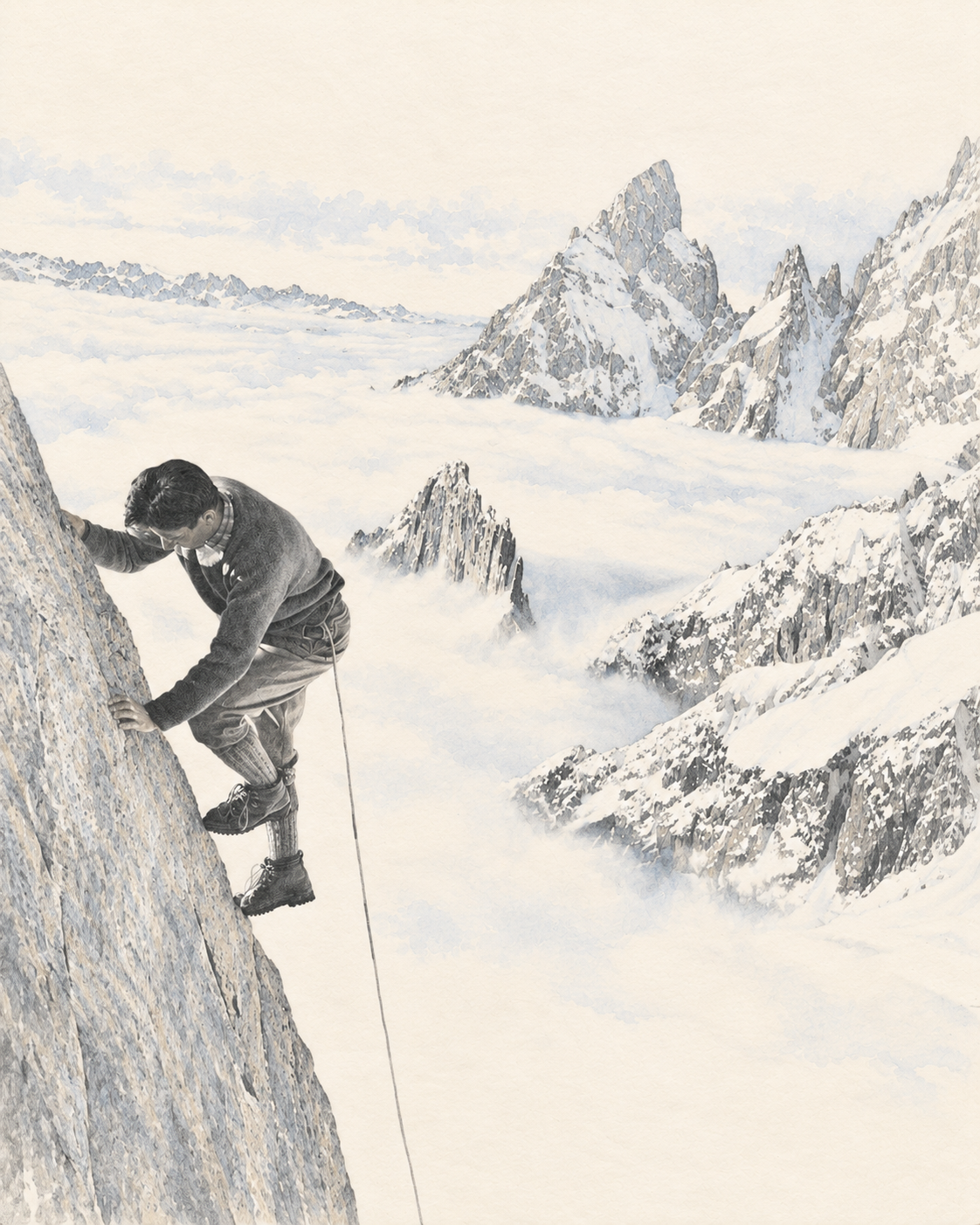
After the Frêney tragedy of 1961, Bonatti settled in Chamonix. Across the border lay the same massif, but a different stage of his life.3
The writer did not suddenly emerge after the last great climb. Le mie montagne appeared in 1961, while Bonatti was still deeply involved in mountaineering.3
The archives extend that chronology. They include the diary of the 1958 Gasherbrum IV expedition, preparatory texts, annotations and working documents. A page reproduced by the Italian Alpine Club combines a sketch from his ski traverse of the Alps with a few handwritten words locating the Colle del Mulo between the Maira and Stura valleys. Writing also served to name a place and establish where he was.5
It is tempting to separate the climber from the storyteller: action first, recollection afterwards. The notebooks make that division less clear. A route is travelled and then recorded; an experience becomes a page without waiting for a career to end. Photography and writing need not replace the mountain. They can preserve something beyond the name of a route.
The Matterhorn, one last great route
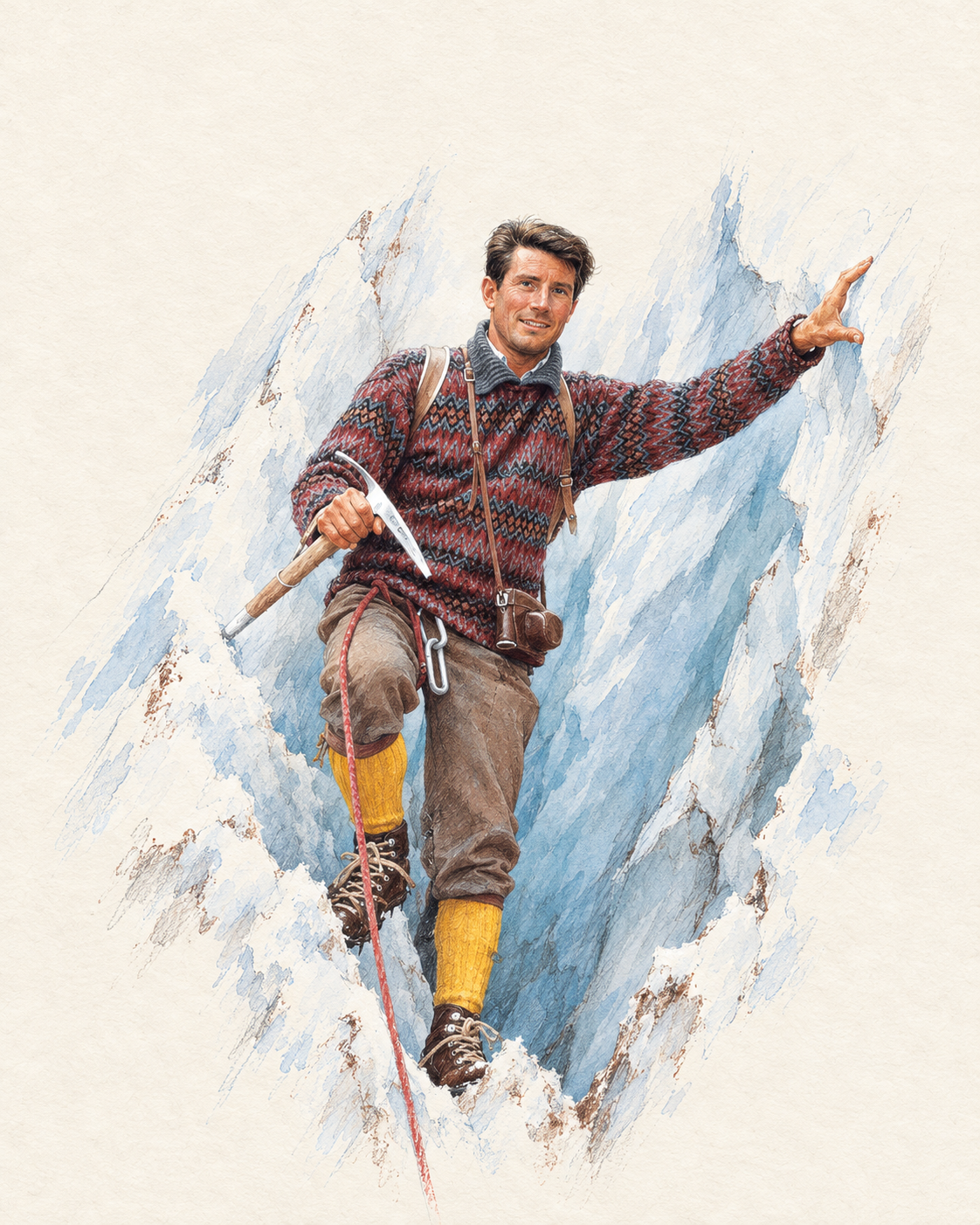
In February 1965, Bonatti opened a new route on the north face of the Matterhorn, alone and in winter.6
On 23 February, photographers met him in Cervinia. An image held by the Swiss National Museum shows him among the crowd gathered to welcome him. At thirty-four, he brought his career in extreme mountaineering to a close.6
In the months that followed, he prepared for a different kind of journey. His collaboration with Epoca magazine would now bring his writing and photography together in extended travel reports.7
The journey continues on the page
In 1965, his relationship with Epoca entered a new phase. An exclusive agreement provided for serialised reports, written and photographed by Bonatti. He travelled to Alaska that year, following the traces of the gold prospectors; readers began discovering the report in February 1966.7
Another archive photograph, taken in Canada in 1965, shows him writing his diary at a bivouac beside the Yukon. Tent and notebook share the frame. After the climbing partnerships and the walls, this scene offers a concrete image of his work: being there, then putting the experience into words.4
His travels would take him to Africa and Antarctica, among other places. His collaboration with Epoca continued until 1979, while his writing and lectures carried on beyond it.8
Ending the story at the Matterhorn would therefore leave a substantial part of his life outside the frame. Bonatti belongs to the history of Mont Blanc, but his work cannot be contained in an inventory of ascents. Alongside the routes remain the notebooks, photographs and books: not the accessories of a career already over, but another way to carry the story forward.
Sources
1. Treccani — Walter Bonatti2. Musée national de la montagne — Ascensioni3. CAI — Montagne360, juin 20174. CAI / Museomontagna — Stati di grazia5. CAI — Montagne360, mai 20176. Musée national suisse — Le Cervin7. Fondation Mondadori — Epoca Alaska8. Fondation Mondadori — BiographieMusée national de la montagne — Retour du CervinArchive photographique — Entrèves 1957Krist@f — photographie source du CervinLicence illustration Cervin — CC BY-SA 2.0 FRCredits
Matterhorn illustration adapted from Matterhorn - North face — Krist@f, Wikimedia Commons. Photograph reinterpreted in graphite and watercolor. This illustration is distributed under CC BY-SA 2.0 FR.
